

Published By Peter Davies
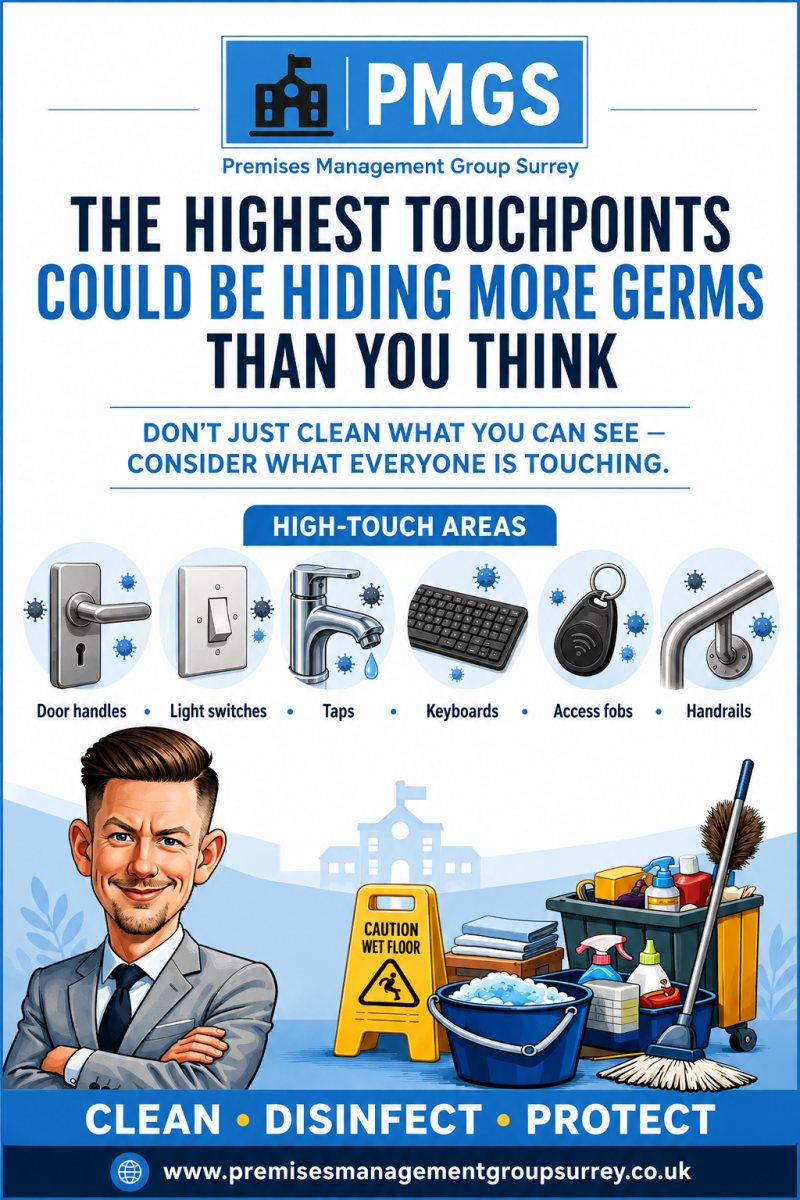
The Highest Touchpoints Could Be Hiding More Germs Than You Think
When we think about cleaning a building, our attention often turns to floors, toilets, desks and other visibly dirty areas. However, some of the greatest cross-contamination risks may be found on the smaller surfaces people touch throughout the day.
These high-touch points can be handled by dozens—or even hundreds—of people, allowing germs and bacteria to transfer easily from hands to surfaces and then to other areas of the premises.
Commonly Overlooked High-Touch Points
High-touch surfaces can include:
- Door handles, push plates and handrails
- Light switches and access-control buttons
- Taps, toilet flushes and soap dispensers
- Keyboards, computer mice and shared tablets
- Telephones, radios and remote controls
- Kettles, fridge handles and kitchen appliances
- Lift buttons and reception counters
- Chair backs, desk edges and cupboard handles
- Shared cleaning equipment and machine controls
- Security panels, key safes, keys and access fobs
Although these areas may appear clean, they can still carry contamination that is invisible to the eye.
Cleaning and Disinfecting Are Not the Same
Cleaning removes dirt, grease and organic matter from a surface. Disinfecting uses an appropriate product to reduce harmful microorganisms.
For effective results, surfaces may need to be cleaned before a disinfectant is applied. The product must then remain on the surface for the manufacturer’s recommended contact time.
Spraying a product and wiping it away immediately may not allow it enough time to work effectively.
Always follow:
- The manufacturer’s instructions
- The correct dilution rate
- The recommended contact time
- COSHH requirements
- Appropriate PPE guidance
- Surface compatibility instructions
Preventing Cross-Contamination
Using the same cloth across toilets, kitchens, offices and communal areas can spread contamination rather than remove it.
A well-managed cleaning programme should include:
- Colour-coded cleaning equipment
- Separate cloths for different areas
- Regularly refreshed cleaning solutions
- Clean water and equipment
- Correct disposal or laundering of used cloths
- Routine cleaning of cleaning-machine controls and handles
- Clear high-touch-point cleaning schedules
- Staff training and effective supervision
Focus on Frequency, Not Just Appearance
A surface does not need to look dirty to require cleaning.
The appropriate cleaning frequency should be based on how often the surface is touched, who uses it and the level of risk within the environment. Busy entrances, shared facilities, washrooms, kitchens and communal spaces may require attention several times throughout the day.
Schools, workplaces, community venues and commercial premises should identify their high-touch surfaces and include them within their daily cleaning checks.
The PMGS Approach
At Premises Management Group Surrey, we believe effective cleaning is about more than creating a good appearance. It is about protecting building users, reducing cross-contamination and maintaining safer, healthier and better-managed environments.
Sometimes, the smallest touchpoint can present one of the biggest cleaning risks.
Don’t just clean what you can see—consider what everyone is touching.
For professional premises management consultancy and cleaning support, contact PMGS:
📧 info@premisesmanagementgroupsurrey.co.uk
🌐 www.premisesmanagementgroupsurrey.co.uk
Premises Management Group Surrey
Excellence in Premises Management for a Stronger Tomorrow
Add comment
Comments