

Published By
Peter Davies
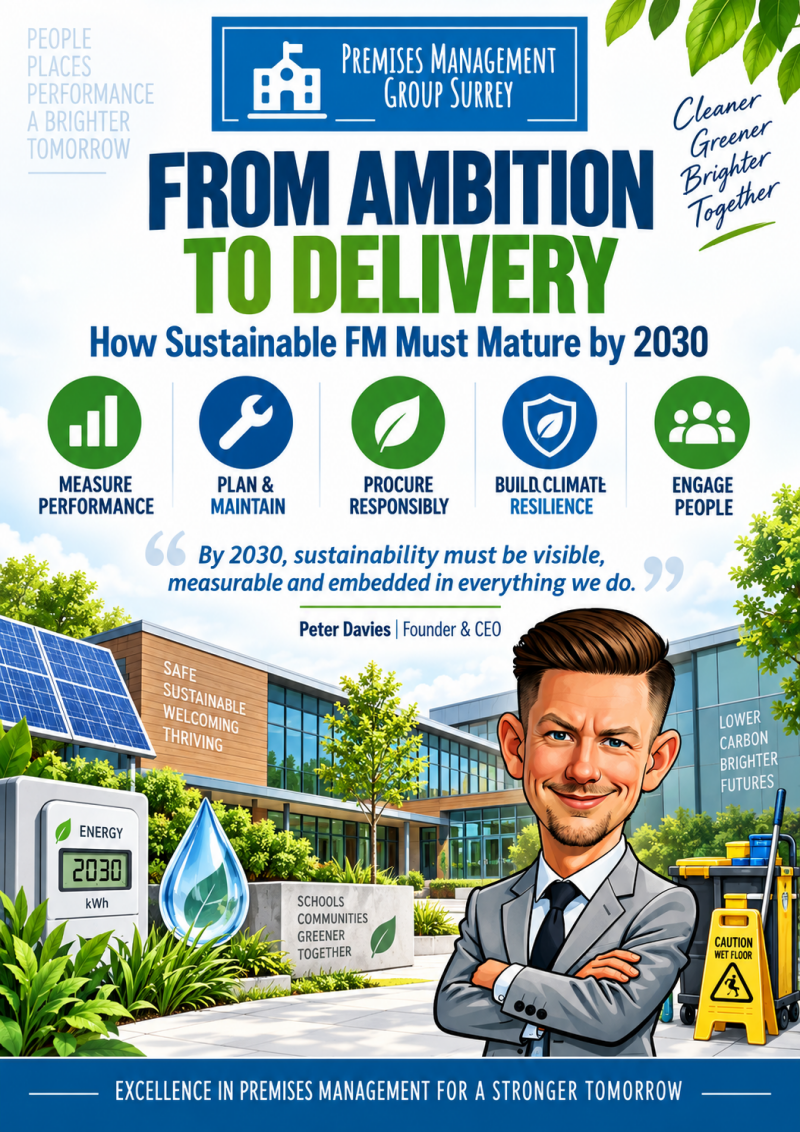
From Ambition to Delivery: How Sustainable FM Must Mature by 2030
Sustainability is no longer an optional addition to facilities management. It is becoming a central measure of how effectively buildings, estates and services are managed.
For years, many organisations have published environmental commitments, net-zero ambitions and sustainability strategies. However, by 2030, success will no longer be judged by the strength of those promises—it will be judged by measurable delivery.
Facilities management must now lead the transition from environmental ambition to operational action.
Sustainability Must Become Part of Everyday FM
Sustainable facilities management cannot exist as a separate project or annual campaign. It must be embedded into everyday decisions, including:
- Energy and water management
- Planned and preventative maintenance
- Cleaning operations
- Waste reduction and recycling
- Procurement and contractor selection
- Building refurbishment
- Transport and deliveries
- Grounds maintenance and biodiversity
- Staff training and building-user behaviour
Every maintenance decision, cleaning specification and purchasing choice can either support or weaken an organisation’s environmental objectives.
By 2030, sustainability must be treated as a core operational responsibility—not simply a corporate target.
Better Data Must Drive Better Decisions
Organisations cannot manage what they do not properly measure.
FM teams need access to reliable information covering energy consumption, water use, waste volumes, equipment performance, maintenance costs and carbon emissions.
This means moving beyond annual totals and focusing on meaningful operational data.
Facilities teams should be able to identify:
- Which buildings consume the most energy
- Where water is being unnecessarily wasted
- Which assets are inefficient or regularly breaking down
- Whether environmental improvements are delivering savings
- How contractor and supplier performance compares
- Where further investment will produce the greatest benefit
Technology, smart meters and building management systems can support this work—but data only creates value when somebody understands it, questions it and acts upon it.
Planned Maintenance Supports Sustainability
Poorly maintained buildings are rarely sustainable buildings.
Damaged doors, leaking taps, failing controls, blocked ventilation systems and inefficient heating equipment all increase waste, costs and carbon emissions.
A mature sustainable FM strategy must therefore include strong planned preventative maintenance.
Regular inspection and servicing can:
- Extend the lifespan of equipment
- Improve energy efficiency
- Reduce emergency repairs
- Prevent unnecessary replacement
- Protect building users
- Support long-term financial planning
Replacing equipment should not always be the first response. Where safe and practical, repairing, maintaining and upgrading existing assets can reduce waste and provide better long-term value.
Sustainable Procurement Must Consider the Whole Lifecycle
The cheapest product is not always the most sustainable—or the most cost-effective.
By 2030, procurement decisions must consider the entire lifecycle of products and services, including:
- How materials are manufactured
- Energy and water consumption
- Packaging and transportation
- Durability and repairability
- Maintenance requirements
- Responsible disposal or recycling
- Supplier environmental standards
This applies to everything from cleaning chemicals and consumables to flooring, lighting, heating systems and major building projects.
Whole-life value must replace short-term purchasing decisions.
Cleaning Services Must Evolve
Cleaning plays an important role in creating healthy and sustainable buildings.
Sustainable cleaning does not mean lowering hygiene standards. It means achieving high standards through better products, equipment, training and working practices.
This may include:
- Correct chemical dosing
- Concentrated or refillable products
- Microfibre cleaning systems
- Low-water cleaning equipment
- Reduced single-use plastics
- Energy-efficient machinery
- Responsible waste separation
- Improved stock control
- Better staff training
The greatest environmental benefits are often achieved through consistent daily practices rather than occasional large-scale initiatives.
Buildings Must Become More Climate-Resilient
Sustainability is not only about reducing carbon emissions. Facilities must also prepare for the effects of a changing climate.
Buildings may increasingly face:
- Higher summer temperatures
- Heavier rainfall
- Flooding and drainage pressures
- Water shortages
- Greater demands on ventilation
- Increased grounds-maintenance challenges
- Disruption to utilities and supply chains
FM teams must understand these risks and include resilience within emergency planning, maintenance programmes and future investment decisions.
A building cannot be considered sustainable if it is unable to remain safe, functional and comfortable during changing environmental conditions.
People Will Determine Whether Strategies Succeed
Technology and investment are important, but people ultimately determine whether sustainability commitments succeed.
Facilities teams must work closely with senior leaders, employees, contractors, building users and local communities.
Clear communication and practical training can encourage simple but important behaviours, such as:
- Switching off unnecessary lighting and equipment
- Reporting leaks and faults promptly
- Using heating and cooling systems responsibly
- Separating waste correctly
- Reducing unnecessary printing and purchasing
- Protecting landscaped areas and natural habitats
Sustainability becomes effective when everyone understands how their actions contribute to the organisation’s wider objectives.
FM Must Have a Voice at Leadership Level
Facilities management cannot deliver sustainable estates without sufficient authority, resources and investment.
FM professionals understand how buildings perform in real operating conditions. They see where energy is wasted, where assets are failing and where procedures do not reflect what is happening on site.
That operational knowledge must inform strategic decisions.
Leadership teams should involve FM professionals when setting environmental targets, approving capital projects and developing long-term estate strategies.
Sustainability targets created without operational input risk becoming disconnected from reality.
Moving From Ambition to Delivery
By 2030, sustainable FM must demonstrate:
- Clear accountability
- Measurable targets
- Reliable performance data
- Effective maintenance
- Responsible procurement
- Climate resilience
- Workforce engagement
- Continuous improvement
- Evidence of genuine operational delivery
The sector must move beyond good intentions and begin showing what has actually changed across its buildings and services.
Sustainable facilities management is not achieved through one policy, one project or one new piece of technology. It is created through thousands of informed operational decisions made consistently over time.
The organisations that succeed will be those that connect their environmental ambitions with the everyday management of their estates.
The challenge for facilities management is clear:
By 2030, sustainability must no longer be something we intend to deliver. It must be visible, measurable and embedded within everything we do.
⸻
Peter Davies
Founder & CEO
Premises Management Group Surrey
Excellence in Premises Management for a Stronger Tomorrow
🌐 www.schoolpremisesmanagementcleaningsolutionsservices.co.uk
✉️ info@premisesmanagementgroupsurrey.co.uk
☎️ Office: 020 3952 1438
📱 Mobile: 07523 024900
💬 WhatsApp Business: 07517 819936
Add comment
Comments