

Published By Peter Davies
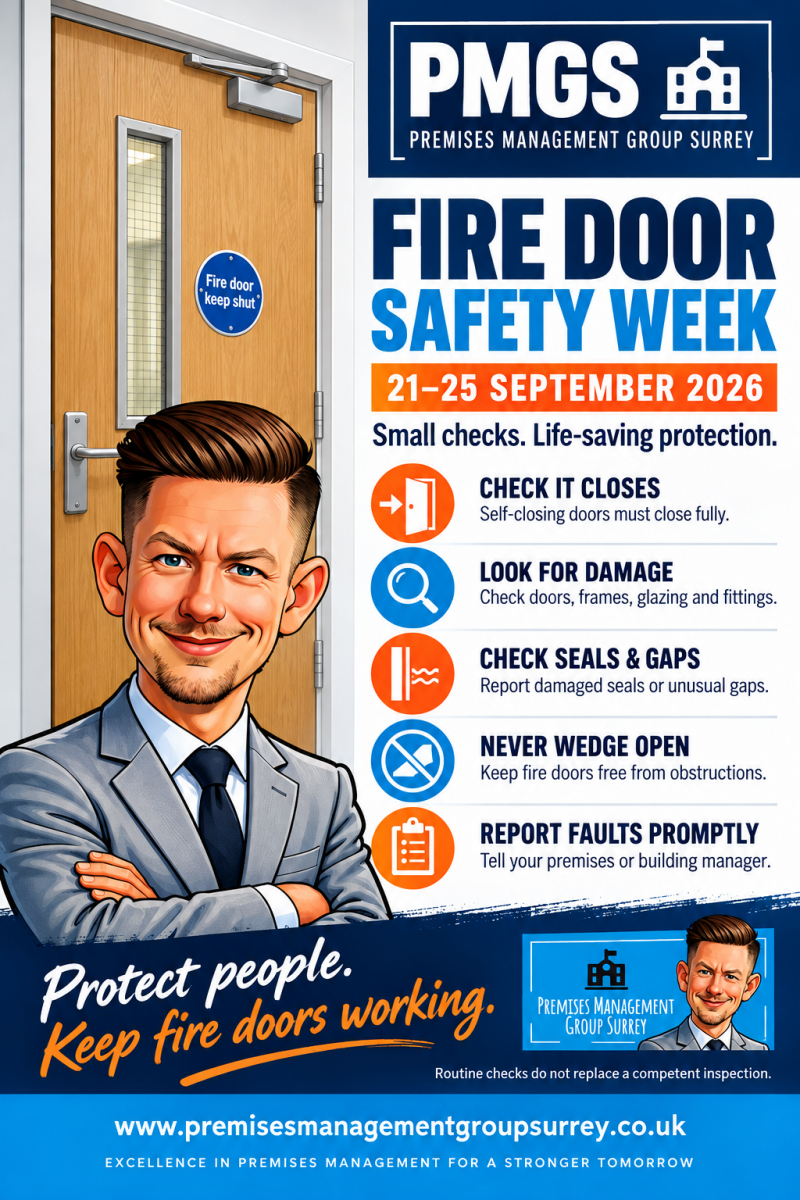
Fire Door Safety Week 2026: Small Checks Can Make a Life-Saving Difference
21–25 September 2026 | PMGS Blog
Fire doors are part of our everyday surroundings in schools, workplaces and shared buildings.
We pass through them regularly, but how often do we stop to consider the protection they provide?
This Fire Door Safety Week, PMGS is encouraging premises teams, building managers, staff and building users to give fire doors the attention they deserve. The campaign runs from 21 to 25 September 2026.
A fire door has an essential job
A correctly specified, installed and maintained fire door helps restrict the spread of fire and smoke, protecting escape routes and giving people valuable time to reach safety.
Its performance depends on the whole assembly: the door, frame, glazing, seals, hinges and other fittings. Damage, unsuitable alterations or poor maintenance can compromise that protection. (firedoorsafetyweek.co.uk, firedoorsafetyweek.co.uk)
What should you look out for?
Simple observations can help identify problems that need attention:
- Closing problems: Where a self-closing device is fitted, does the door close fully without assistance?
- Visible damage: Are the door, frame or glazed panels cracked, damaged or loose?
- Damaged seals: Are fitted strips or smoke seals damaged, loose or missing?
- Loose fittings: Are hinges, handles or other components visibly loose or damaged?
- Unusual gaps: Are there noticeably uneven or excessive gaps around the closed door? These should be assessed against the requirements for that particular door.
These observations help identify concerns; they do not replace a competent inspection or the building’s fire risk assessment. (gov.uk, firedoorsafetyweek.co.uk, gov.uk)
Never wedge a fire door open
Holding a fire door open with a wedge, chair or extinguisher can prevent it from providing protection when needed.
Where doors need to remain open during normal use, suitable automatic hold-open arrangements should be assessed by a competent professional.
Do not disconnect closing devices or make unauthorised alterations to fire doors.
Report problems so they can be properly addressed. (london-fire.gov.uk,
Make fire door safety part of everyday premises management
In busy schools and shared premises, doors experience frequent use, knocks from equipment and changes in how rooms are occupied.
Regular checks and planned maintenance help teams identify deterioration early.
Use this week to review your checking schedule, remind staff and hirers how to report concerns, and follow up outstanding repairs.
Checks should reflect the building’s risks and how heavily doors are used. (firedoorsafetyweek.co.uk)
When reporting a fault, give the exact door location and describe the problem clearly.
Premises teams should record the concern, arrange appropriate action and confirm that it has been resolved.
At PMGS, we believe safe premises depend on consistent attention to the details that protect people. Fire Door Safety Week is an opportunity to strengthen those habits throughout the year.
Notice a problem? Report it promptly. A small action could make a life-saving difference.
PMGS — Premises Management Group Surrey
Excellence in Premises Management for a Stronger Tomorrow.
www.premisesmanagementgroupsurrey.co.uk
#FireDoorSafetyWeek #FireDoorSafety #PMGS #PremisesManagement #FacilitiesManagement #SchoolSafety
Add comment
Comments