

10 ways to check your radiators are working correctly across your estate
PMGS | Premises Management Group Surrey
Published By Peter Davies
Carry out these checks while the heating is scheduled to run and the rooms are still below their target temperature.
Give the system time to warm up before comparing radiators.
Check the heating schedule.
Confirm the correct building or zone is programmed to heat.
1.
Pay particular attention to weekends, school holidays and out-of-hours lettings.
2.
Check the room temperature.
Use a room thermometer away from radiators, windows and draughts.
Compare the reading with the room’s target temperature.
3.
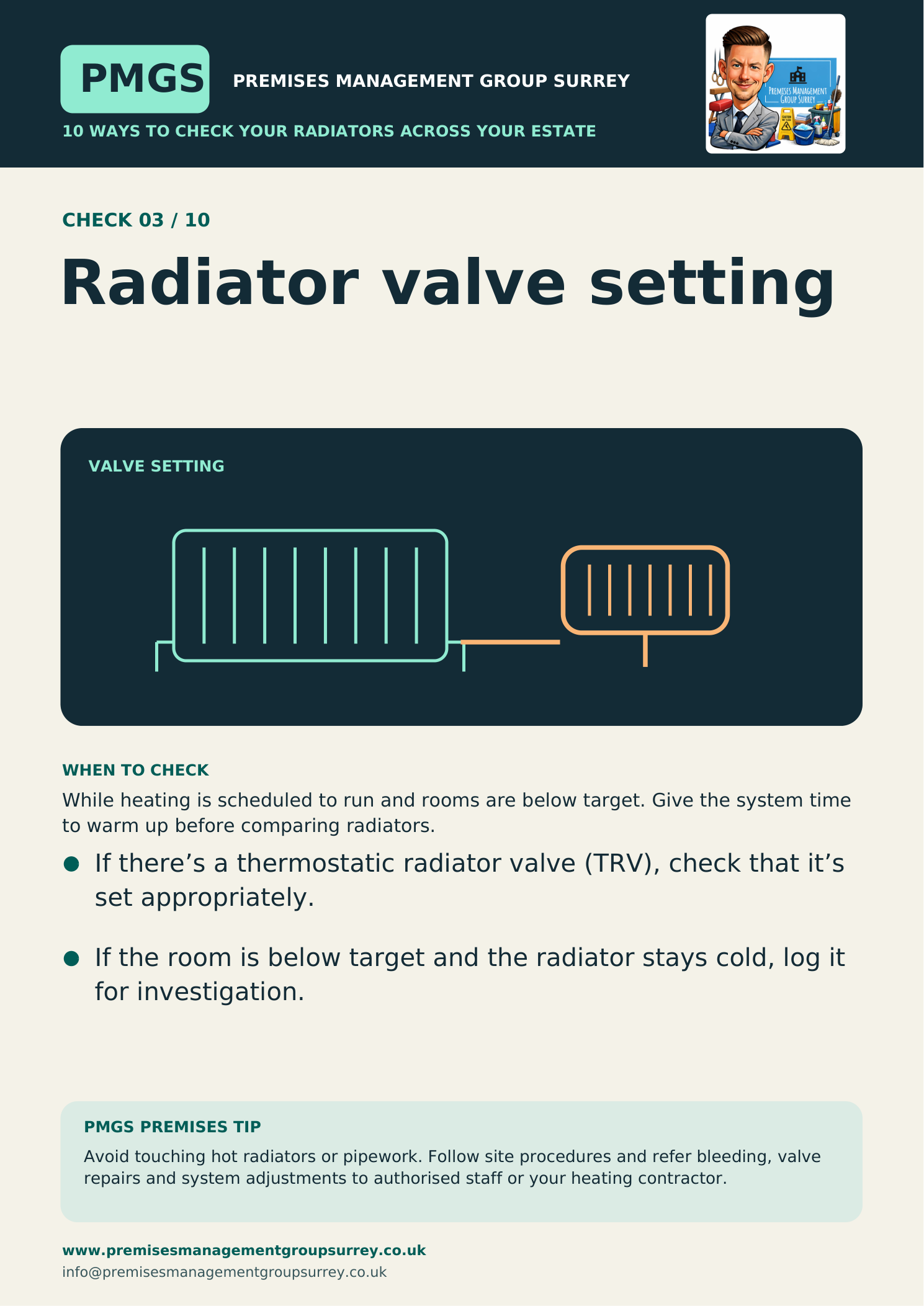
Check the radiator valve setting. If there’s a thermostatic radiator valve (TRV), check it’s set appropriately.
If the room is below target and the radiator stays cold, log it for investigation.
4.
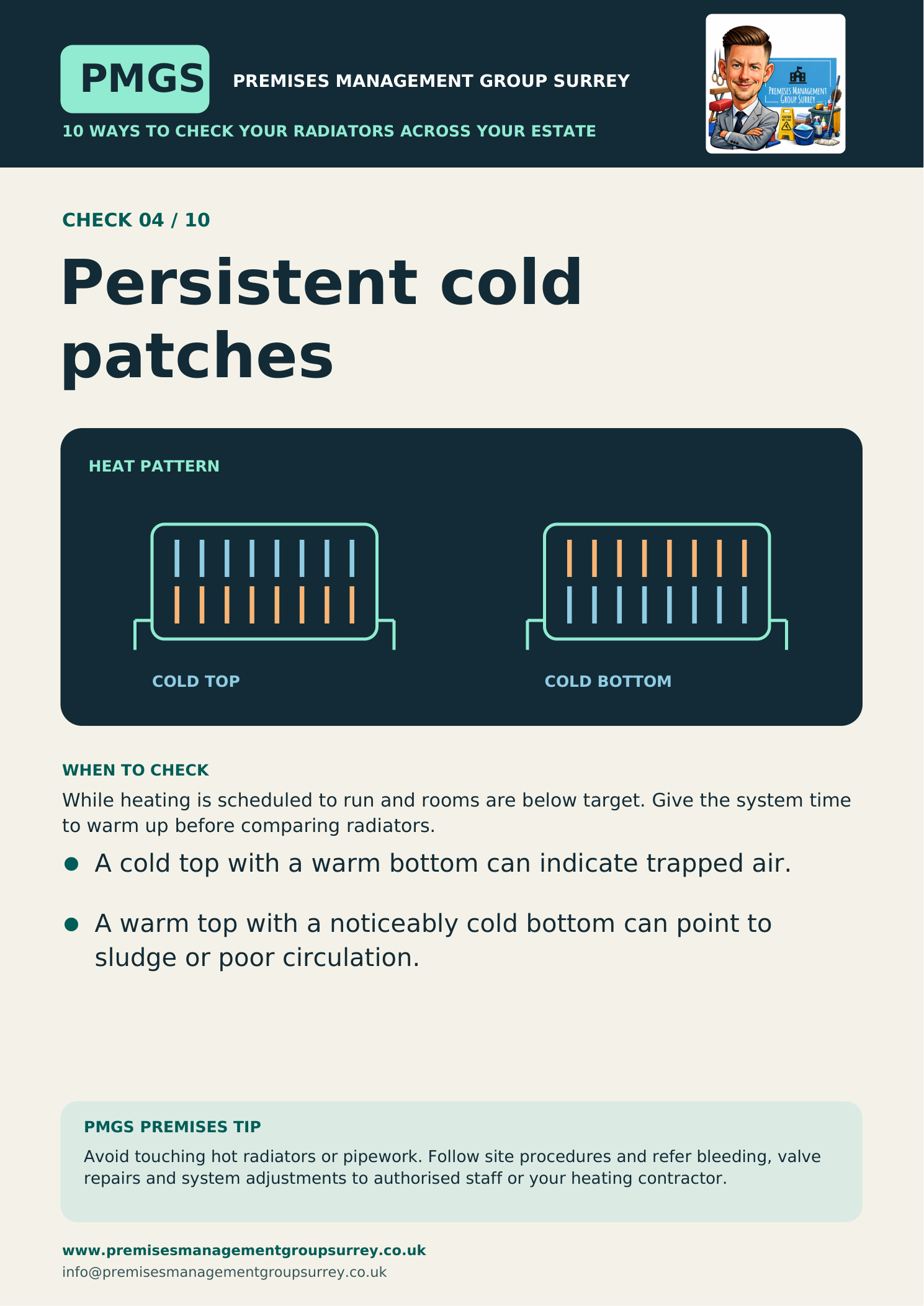
Look for persistent cold patches.
A cold top with a warm bottom can indicate trapped air.
A warm top with a noticeably cold bottom can point to sludge or poor circulation.
5.
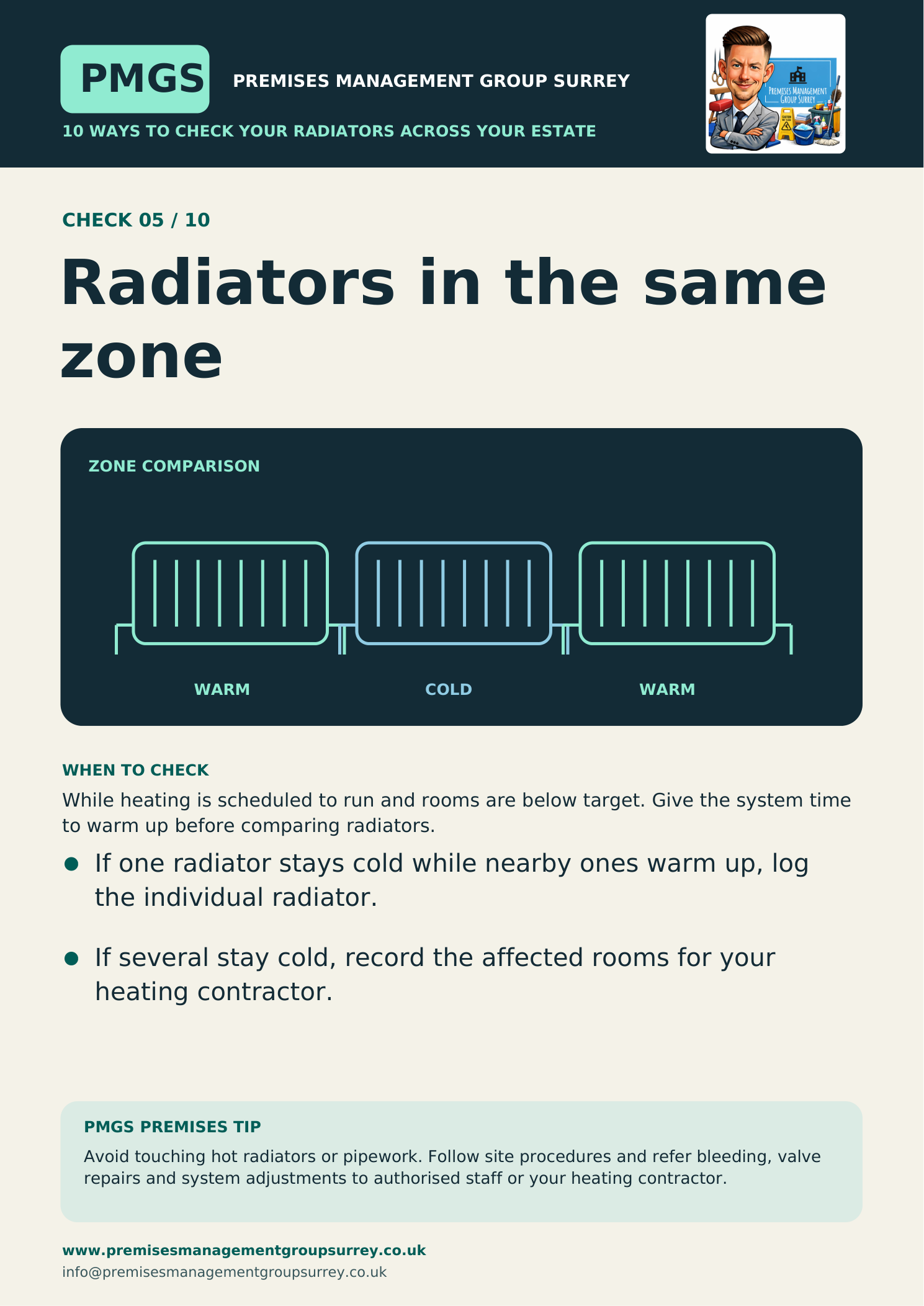
Compare radiators in the same zone.
If one radiator stays cold while nearby ones warm up, log the individual radiator.
If several stay cold, record the affected rooms so your heating contractor can investigate the zone.
6.
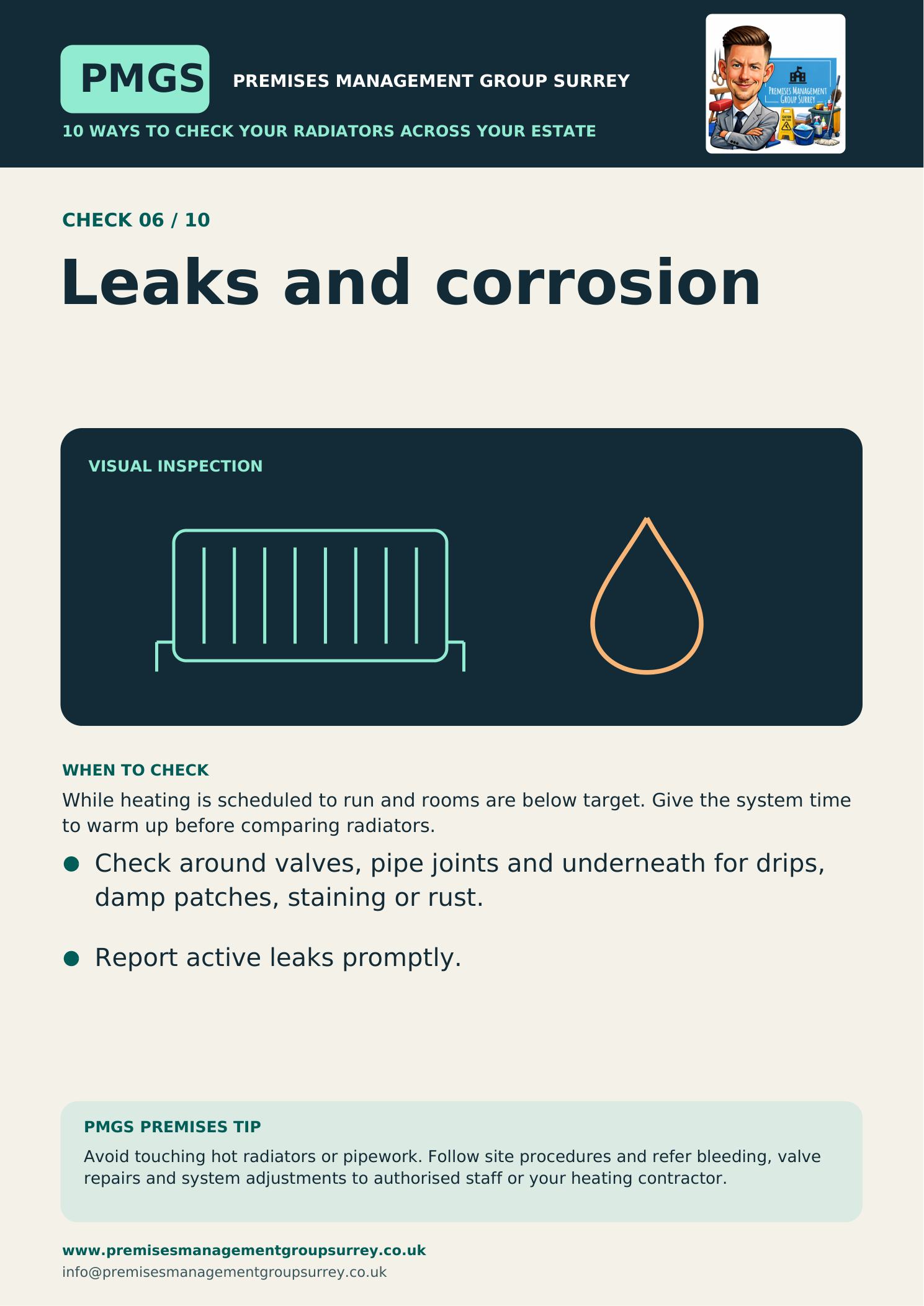
Look for leaks and corrosion.
Check around valves, pipe joints and underneath the radiator for drips, damp patches, staining or rust.
Report active leaks promptly.
7.
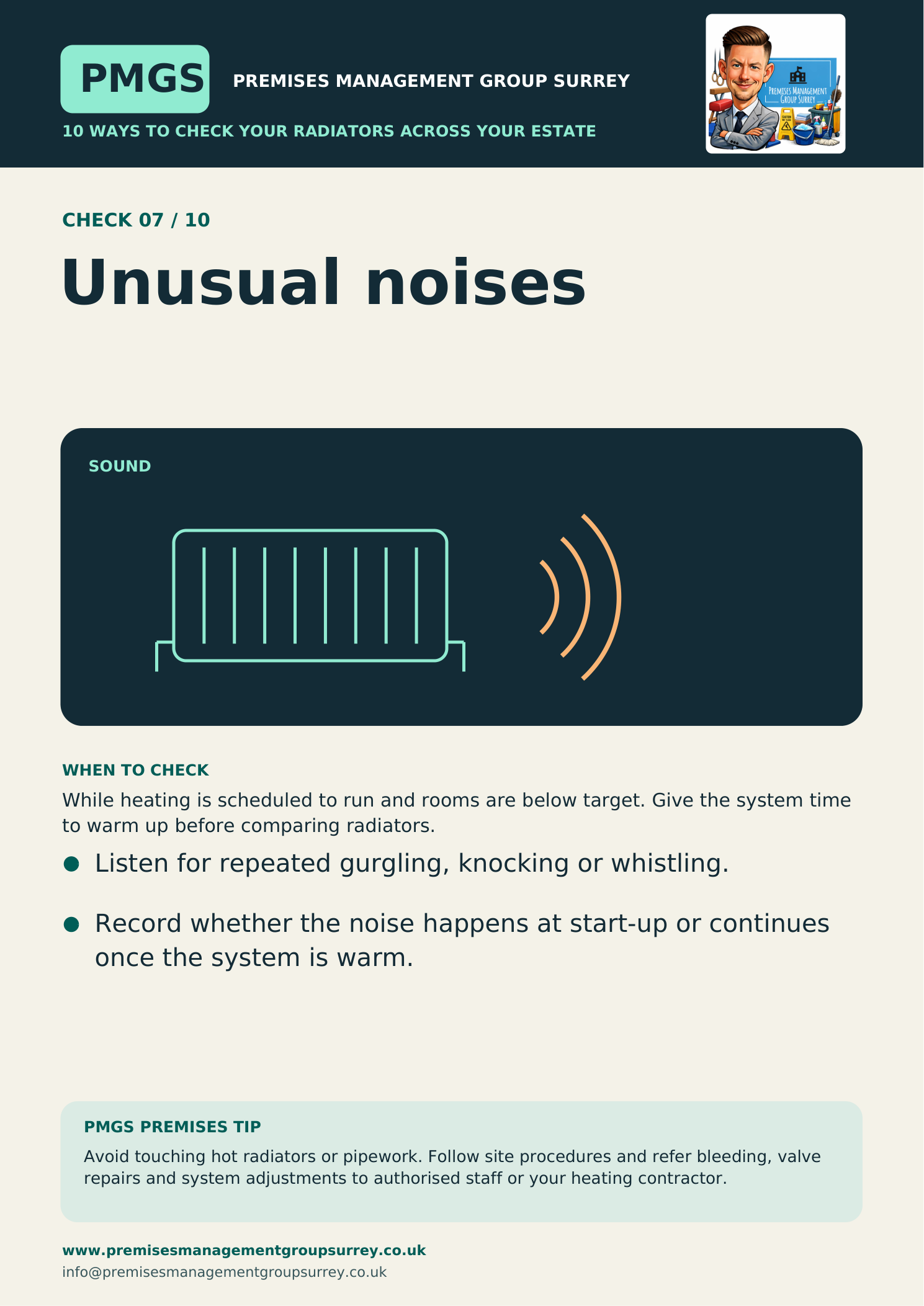
Listen for unusual noises.
Note any repeated gurgling, knocking or whistling, and record whether it happens at start-up or continues once the system is warm.
8.
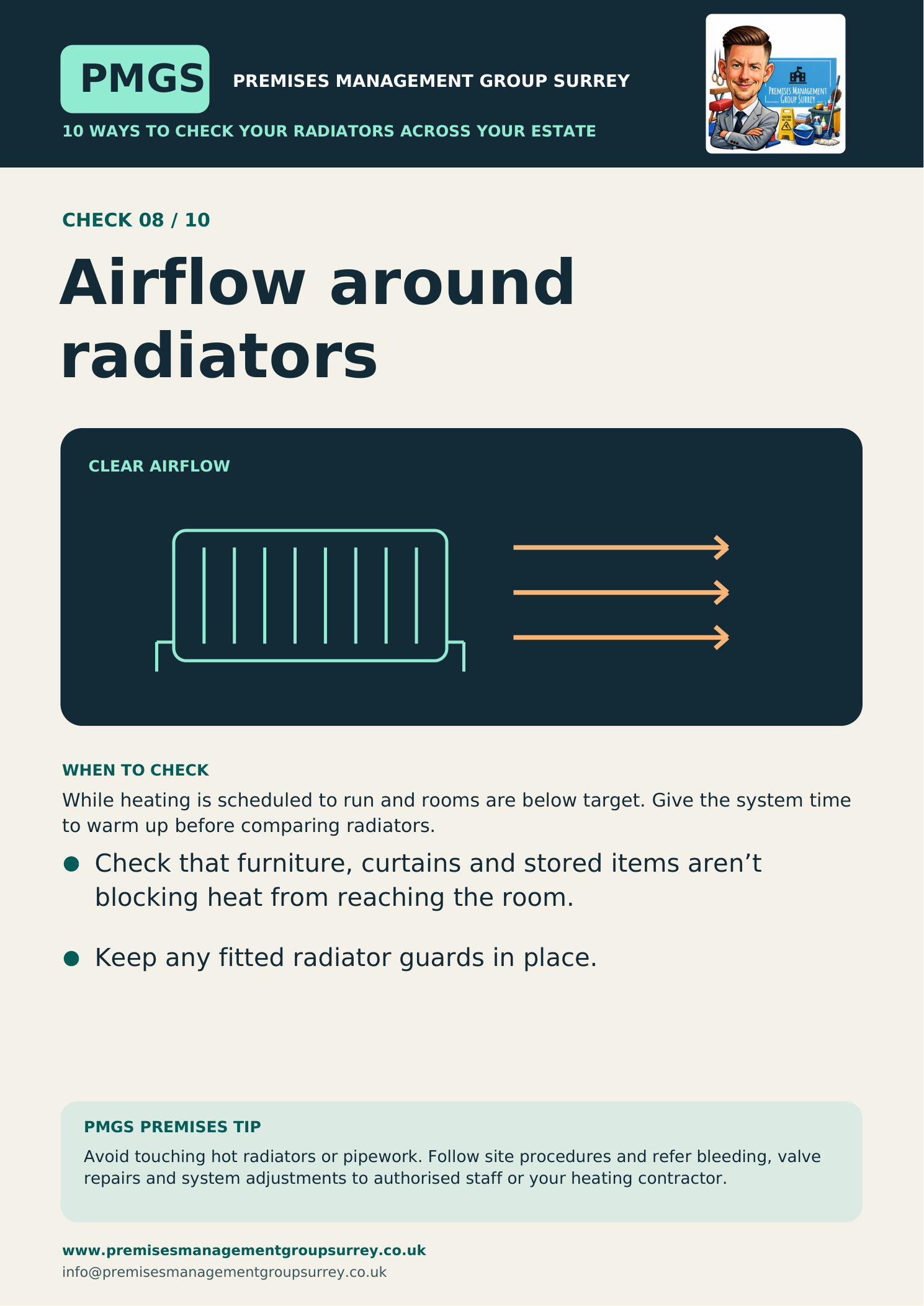
Keep airflow clear.
Check that furniture, curtains and stored items aren’t blocking heat from reaching the room.
Keep any fitted radiator guards in place.
9.
Inspect brackets and guards.
Look for loose fixings, damaged covers or sharp edges.
Report anything that could present a risk to pupils, staff or visitors.
10.
Record the fault and recheck after repairs.
Log the building, room, radiator ID, date, room temperature and symptoms.
Once the work is complete, confirm the radiator warms up and the room reaches its target temperature.
PMGS premises tip
Avoid touching hot radiators or pipework.
Follow your site’s procedures and refer bleeding, valve repairs and system adjustments to authorised staff or your heating contractor.
Add comment
Comments